

Stock Buybacks Surge as Corporate Confidence Reaches New Heights 📈💰
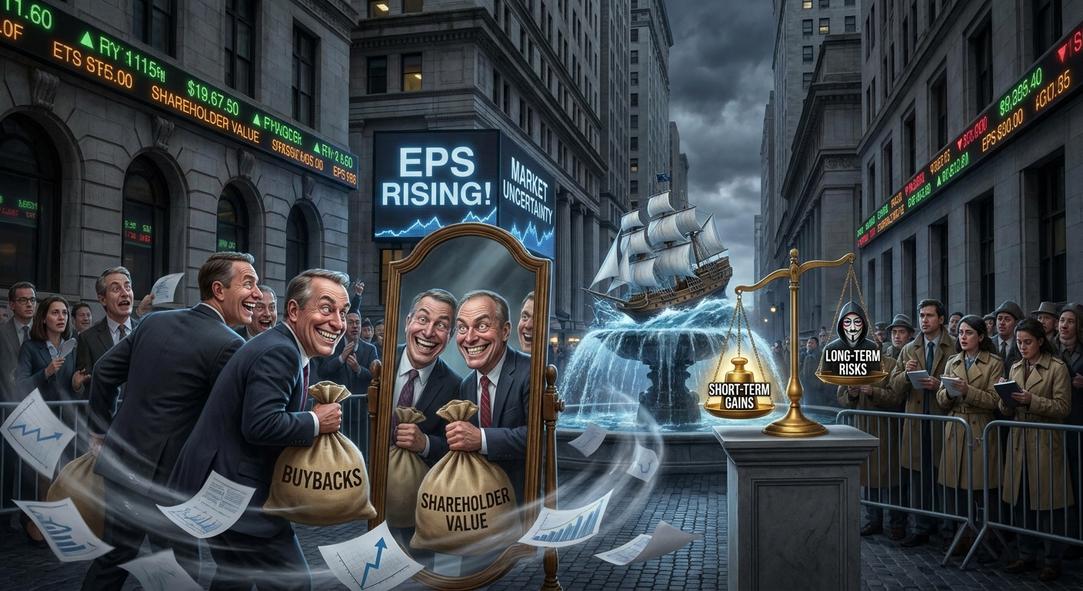
In an era where headlines often paint a picture of economic uncertainty akin to a ship braving an unpredictable storm, one might wonder: why are corporate executives on Wall Street grinning like Cheshire cats? The answer is the latest surge in stock buybacks—a financial maneuver reminiscent of a prosperous time when publicly traded companies acted like gluttons of yore gorging on their own shares. This newfound exuberance raises eyebrows and questions. Is this confidence rooted in genuine optimism, or is it simply a signal of over-bloated egos? 🤔🐱
A Dance with Hubris?
Buybacks, those curious self-reflective exercises, have become the corporate equivalent of looking in the mirror and singing one’s own praises. It’s as if companies, armed with buckets of cash, stand alongside Narcissus, admiring their brilliance in the market’s deep pool. But herein lies the antithesis: while executives declare “confidence,” critics argue it’s just artful distraction—a sleight-of-hand intent on sprucing up earnings-per-share (EPS) figures with a vandal’s touch. Stock prices rise, making it seem as though the company’s value is swelling, when in fact, it’s naught more than corporate legerdemain.
The Numbers Speak as Loud as Trumpets
A recent study revealed that corporations spent over $800 billion on buybacks in the last fiscal year, a staggering record that dwarfs previous attempts to bolster stock prices through these transactions. According to market analysts, buyback announcements tend to precede a 2-3% increase in stock price on average, providing a tidy return for shareholders, at least in the short term.
Some might suggest this capital should redirect itself to more productive lines, such as research and development, new job creation, or even increased wages for employees. The irony here is almost poetic in its contradiction—firms lament skills shortages and underinvestment in technology, yet pour resources into buybacks as though they were manna dew from heaven.
Pros and Cons: The Great Financial Balancing Act
Buybacks do have their advocates, of course. Proponents chant the familiar mantra: they return excess capital to shareholders, allow flexibility, and signal confidence that the company’s stock is undervalued. It’s the corporate equivalent of Marie Kondo-ing one’s finances—keeping only that which ‘sparks joy,’ or rather, value in the community of investors.
- Pros: Enhance shareholder value, improve EPS, and provide market indications of intrinsic stock value.
- Cons: Potential misuse of funds, unfavorable optics, and the risk of masking operational shortcomings.
Are these financial pyrotechnics merely showmanship, or is there some strategic alchemy at play? Will we eventually look back upon this period as one of foresight or folly? A fascinating paradox unfolds as the economic seas continue their restless tumbling.
Looking Ahead: Hope or Hubbub?
The ceaseless waves of buybacks present a highly curious phenomenon in an ecosystem where stark contrasts abound. Global instability and inflation might have one believe that capital preservation would be the primary concern, yet instead, companies appear to adopt a ‘now or never’ philosophy, eagerly spending as if there were no tomorrow ⏳.
As the world spins, one is left to wonder: Is this financial fervor a prelude to an economic renaissance, or do we risk stepping into a future paved with unintended consequences? We may well stand at the precipice of an intriguing era—one where the delicate dance between confidence and caution demands an audience both discerning and patient. In the symphony of stocks, it remains to be seen whether this crescendo leads to a harmonious conclusion or falls into discord: a verdict held tightly by the hands of time itself 🎶⏰.