
Trump Calls for Wall Street Journal Regime Change: Unpacking the Drama
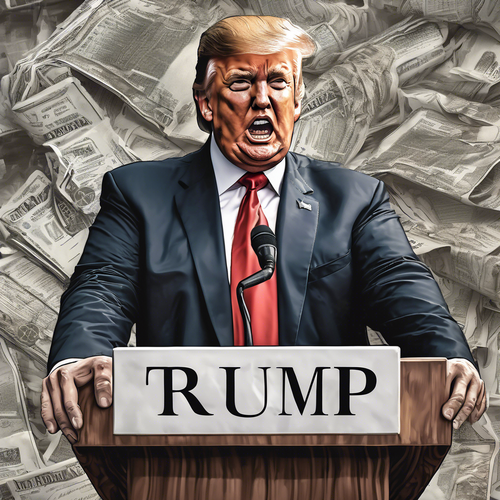
In a fiery outburst that sent shockwaves through the media landscape, former President Donald Trump invoked the phrase “regime change,” drawing parallels to political upheaval typically reserved for far-flung authoritarian regimes. His target? The Wall Street Journal, a publication traditionally known for its business acumen and conservative editorial stance. Trump’s vehement denunciation of the newspaper’s editorial team raises pressing questions about media integrity and accountability in an era increasingly marred by polarizing political discourse. 📰💥
A Call to Arms in Media Relations
Trump’s social media tirade accused the Journal of “terrible reporting” and a “phony editorial board,” sparking a wave of reactions across the political spectrum. Notably, this isn’t the first time the former president has targeted the media; however, such aggressive language is strikingly reminiscent of calls for regime change seen in political contexts, wherein leadership is usurped through upheaval. In less than 280 characters, he not only challenged the publication’s credibility but also ignited conversations around the broader implications of media accuracy and bias. 🔥
The Context: Media Under Fire
Trump’s campaign against the Wall Street Journal is neither isolated nor without precedent. Over recent years, a growing number of public figures have accused media organizations—big and small—of bias, manipulation, and misleading reporting. The media’s role in shaping public opinion is scrutinized as never before, leading many to call for increased accountability. According to a recent Pew Research study, over 62% of Americans believe the news media is biased in terms of political reporting. This perception has fueled a divide, prompting calls for change within newsrooms across the country. 📊
What’s at Stake: The Future of Journalism
The ramifications of Trump’s call extend beyond the walls of the Wall Street Journal. As media outlets grapple with evolving audience habits and the prevalence of misinformation, navigating these waters involves striking a delicate balance between critique and accountability. So, what does regime change mean in this context?
- Internal Revisions: Trump’s remarks could embolden calls for restructuring within the Journal, compelling editors to rethink their editorial strategies and align more closely with their audience’s expectations.
- Potential Backlash: Such divisive rhetoric may alienate loyal readers who pride themselves on the investigative robustness and standards of journalism traditionally upheld by the Journal.
- Influence on Media Landscape: Trump’s influential voice could spur other political figures and stakeholders to voice demands for ‘change’ at media outlets, potentially leading to an unpredictable shifting of the landscape of journalism itself.🔄
Facts and Figures: Trump’s Strained Relationship with the Media
It’s crucial to take stock of the ongoing relationship between the former president and the press:
- According to the American Press Institute, nearly 75% of Republican voters express distrust toward mainstream media, a sentiment amplified by Trump’s critiques over the years.
- Trump has referred to media outlets—including the New York Times and CNN—as “fake news,” highlighting a trend among politicians to delegitimize media entities that he believes misrepresent his actions. 📉
- In a recent survey, 56% of respondents indicated that they rely on social media as their primary news source, leading to a decline in conventional media consumption; a trend that elevates the role of influencers and creates room for more biased narratives.
Voice of Reason: The Reality Check
“The line between political discourse and media justice has blurred. Calls for regime change at media outlets stem from the unfortunate state of public trust,” explains media analyst Dr. Amelia Grant. “Journalism must strive for fairness, and the opposition must acknowledge the value of critical discourse,” she continues, emphasizing the necessity for nuanced perspectives in coverage. 🗣️
Conclusion: Navigating the Media Maze
As the dust settles from Trump’s latest outburst, one thing is clear: the landscape of journalism is undergoing significant realignment. While his calls for regime change may appear theatrically inclined, they underscore a critical juncture in our collective approach to media consumption, analysis, and accountability. Readers must engage actively, demand transparency, and hold all news outlets to the highest standards of integrity—after all, the truths that emerge from a well-informed populace shape the core of democracy itself. 🗳️
Do you think Trumps feud with the Wall Street Journal will impact the future of journalism? Lets discuss!
I think Trumps feud with the Wall Street Journal is just another media circus distracting from real issues. Whats your take?
Wow, Trump calling for regime change at Wall Street Journal? Drama alert! Is this a PR stunt or genuine concern? Lets discuss!
I dont get why Trump is targeting the Wall Street Journal. Maybe hes trying to distract from something bigger? Whats your take?
I think Trumps feud with the Wall Street Journal is just a distraction from bigger issues. Media drama at its finest!
I cant believe Trump is stirring up more drama with the media. Whats next, a reality show showdown? Its getting wild!
Do you think Trumps attack on the Wall Street Journal signifies a dangerous trend in media relations? Share your thoughts!
I cant believe Trump is stirring up drama like this! Do you think the media is really under fire, or is it just a power play?