

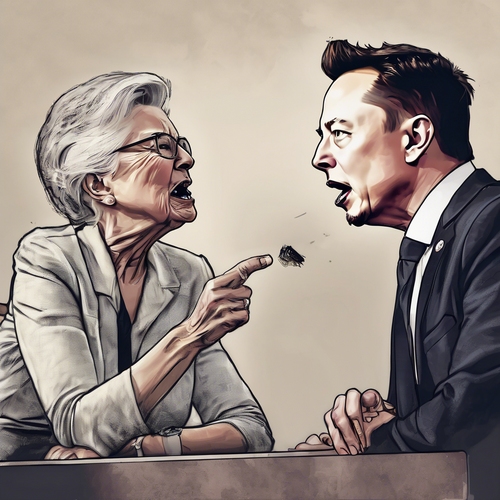
Defending the Innovator: Musk’s Mother Responds to WSJ Criticism
Amidst swirling controversy, Elon Musk’s mother, Maye Musk, has stepped into the fray to defend her son against a scathing article published by the Wall Street Journal that has drawn ire from many, particularly within the women’s reporting community. Her vehement response showcases the challenges of media perception surrounding high-profile figures, especially in a world that often thrives on sensationalism. 🚀
The original article from the WSJ, which labeled Musk’s behavior as “disgraceful” and outlined troubling patterns that critics claim are indicative of a larger issue, found itself under fire not just from Musk’s supporters but also from his family. Responding directly on her social media platforms, Maye Musk labeled the piece as “dishonest,” arguing that it was a stark departure from truth and fairness. “It’s easy to twist truths when there’s a narrative to push,” she stated. This claim adds fuel to an ongoing debate regarding journalistic integrity and the portrayal of prominent figures, particularly those in the tech industry. 🎤
The Parental Perspective: A Unique Lens on Controversy
Maye Musk, an accomplished model and dietitian in her own right, has always supported her son throughout his tumultuous journey in the public eye. Known for her clear stance on various issues, it’s not surprising that she would rally to defend her family against what she perceived as an unjust attack. Musk’s mother pointed to her son’s contributions to society through his visionary enterprises, including Tesla and SpaceX, arguing that reports like the one from the WSJ often overlook the broader context of his achievements. 💡
The intersection of personal critique and professional performance seems to be a recurring theme in the narratives surrounding Elon Musk. As the founder of some of the most groundbreaking and ambitious companies of our time, Musk is often at the center of media storms that can distort public perception. Maye Musk’s reaction mirrors a growing frustration among supporters who feel that while public figures should be held accountable, sensationalist reporting can undermine genuine discourse. ⚖️
Analyzing Media Representation: The WSJ and Beyond
The Wall Street Journal article is not an isolated case; it reflects a wider trend in modern journalism where storytelling often prioritizes drama over depth. As media outlets compete for clicks in an age plagued by misinformation and polarized narratives, the line between reporting and opinion often blurs. A Pew Research survey indicated that over 70% of adults believe news organizations intentionally misrepresent facts, which can skew public opinion regarding individuals like Musk. 📊
Critics argue this leads to a ‘cancel culture’ mentality, where public figures are swiftly judged and condemned based on narratives that can sometimes lack balanced scrutiny. As prominent figures like Musk are routinely thrust into the spotlight, it’s crucial to ask who benefits from these stories and what narratives are being crafted in the public imagination. The backlash faced by the WSJ article underscores the need for careful journalism that prioritizes accuracy and nuance over sensationalism. 📰
A Mother’s Role in a Son’s Public Persona
Maye Musk’s defense of her son also highlights the intricate dynamics between public perception and personal relationships. As a mother, her instinct to protect and advocate for her child takes precedence; yet, it also opens a window into the very real emotional toll that being a public figure can exert on families. Responding to critics who say Elon should take responsibility for his actions, Maye offers a more compassionate perspective, reminding us that behind the headlines are families navigating complex landscapes. ❤️
“We are not just a headline, we’re a family. It’s disappointing to see the lack of compassion in portrayals of my son,” she expressed, emphasizing that personal experiences often overshadow the complexities of public narratives.
Public Figures: The New Scrutinized Class
In many ways, public figures like Musk represent a modern archetype of success marred by the pitfalls of celebrity culture. The global attention given to these individuals often positions them as targets for critique, making it imperative for society to engage with nuance rather than knee-jerk reactions. Balancing personal accountability with public scrutiny requires dialogue rather than monologue—encouraging all sides to consider the broader implications of their critiques. 💬
The discourse initiated by Maye Musk’s response may lead to a greater reckoning within media circles on how to approach stories about complex individuals. As the world watches and waits for the next headline, the hope for more responsible journalism remains a pressing concern within this context of evolving dynamics between media and public figures.
Is Elon Musks mom the ultimate PR defender or just a biased parent? Lets discuss over coffee ☕️
I think its refreshing to hear Elon Musks mother speak out. Family perspectives add depth to public figures narratives.
Wow, Musks mom clapping back at the media! Do parents always need to defend their famous kids? Lets discuss!
Elon Musks mom had to step in, but should parents always defend their famous kids? Parental protection or enabling behavior?