

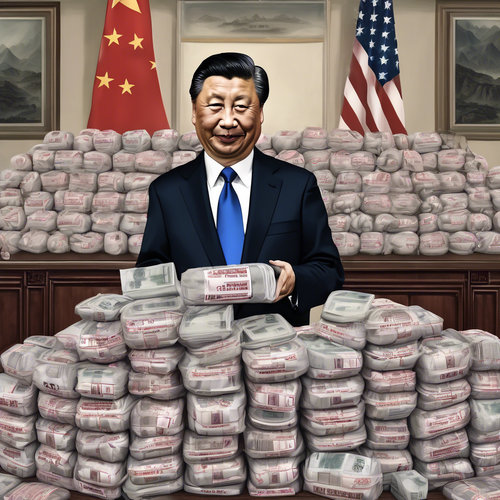
Beijing’s Fentanyl Proposal: A Trade Move or a Public Health Dilemma?
As the fog of trade tensions thickens between the United States and China, a controversial proposition has emerged—Beijing is reportedly weighing an offer regarding fentanyl to jumpstart stalled trade negotiations. 💼 This potential offer could symbolize a precarious balancing act: addressing serious public health concerns surrounding opioid addiction while simultaneously seeking economic reprieve amid a tumultuous geopolitical landscape.
Fentanyl, a synthetic opioid 50 to 100 times stronger than morphine, has played a pivotal role in the U.S. opioid crisis. The Centers for Disease Control and Prevention (CDC) estimates that more than 68,000 opioid-related deaths occurred in 2020, primarily driven by illicit fentanyl. This staggering toll presents an urgent backdrop for any discussions of trade-related concessions. 🚑
The Context: Trade Relations and Fentanyl Crisis
The U.S. and China have exchanged tariffs and threats for years, with each nation wielding economic leverage like a weapon. The ongoing trade dispute has tangled itself in domestic political agendas, with both sides vying for public support and international stature. In this high-stakes environment, every move counts.
China has been identified as the origin of most illicit fentanyl entering the U.S. Despite previous promises from Beijing to curb the production and exportation of this deadly substance, the drug trade has remained rampant, exacerbating a crisis that has impacted families across America. Now, with the potential for a fentanyl-related offer on the table, experts are left to ponder: is this a genuine attempt to address a public health emergency or merely a strategic ploy in infighting political circles? 🔍
Unpacking the Fentanyl Proposal: A Double-Edged Sword
Reports from The Wall Street Journal indicate that Beijing’s potential concessions may include tighter regulations on the production and shipment of fentanyl analogs. While this step could help mitigate the influx of synthetic opioids, critics question the sincerity of such measures. Historian and public policy expert Dr. Lisa Cheng argues, “There’s a fundamental issue in relying on trade negotiations to solve a health crisis that has deep societal roots.” ⚖️
Additionally, the delicate nature of this proposal introduces myriad complexities. For instance, could imposing stricter regulations on fentanyl lead to a more organized and potentially successful track-and-trace system for other drugs? Would the U.S. be willing to compromise on tariffs or technology exports in exchange for China’s commitment to controlling fentanyl? These questions echo the intricate threads woven through international relations, where public health and trade policies cannot operate in silos.
Trade Talks Vs. Lives: The Ethical Dilemma
As both nations grapple with their strategic interests, the question arises: How high is the cost of such negotiations?
Public Health Implications: The opioid crisis has led to widespread despair and socioeconomic ramifications. According to a 2021 study, 90% of individuals in treatment for opioid use disorders reported a loss of employment, and many experienced breakdowns in family structures. Communities hit hardest by this epidemic highlight the urgency of prioritizing public health over political maneuvering.
A Way Forward: Bridging Trade and Health Policies
To navigate this complicated landscape, a comprehensive approach is essential. Experts call for incorporating public health considerations into trade agreements, emphasizing that economic partnerships cannot overlook the welfare of affected citizens. Dr. Daniel Torres, an economist specializing in drug policy, asserts, “Trade negotiations should address the interconnectedness of health and economic policies, rather than treat them as separate entities.” 🌍
The Role of the Global Community
International collaboration may also enhance efforts to confront the fentanyl crisis. Countries like Canada and Mexico, already grappling with similar opioid challenges, could join forces with the U.S. and China. Together, they may establish a unified front to combat fentanyl production and distribution on a global scale. High-ranking officials from these nations have favored public health discussions at global forums, signaling a shift toward collaborative solutions. 🤝
Conclusion: The Stakes Are High
The potential fentanyl offer from Beijing serves as more than a mere trade negotiation; it reflects a deep-seated conundrum that intertwines economic interest with urgent public health needs. With lives hanging in the balance and a nation in crisis, the outcome of such talks will carry repercussions far beyond the negotiating table. In a landscape marred by addiction and despair, stakeholders from both nations—and the wider global community—must prioritize solutions that resonate with the urgency of the opioid epidemic rather than solely economic gains. ⚠️
I think the fentanyl proposal raises serious ethical questions – trade deal or public health crisis? Whats your take?
I believe Beijings fentanyl proposal is a cunning trade move disguised as a public health concern. Its a double-edged sword indeed.
I think the fentanyl trade proposal is a tricky situation. Is it really about trade or public health? Lets discuss!
I think the fentanyl proposal is a tricky situation. Is it really about trade or public health? Lets discuss!
This fentanyl proposal is a tricky situation. Is it really about trade or public health? Im torn!
I believe Beijings fentanyl proposal is a sneaky trade tactic disguised as a public health concern. Lets not fall for it!
I think Beijings fentanyl proposal is a clever trade strategy, but at what cost to public health? Lets debate!
Is Beijings fentanyl proposal really a trade move or a public health dilemma? Lets discuss the ethical complexities!
I think its a tough call – saving lives vs. trade deals. Whats more important: ethics or economics? Tough one!