

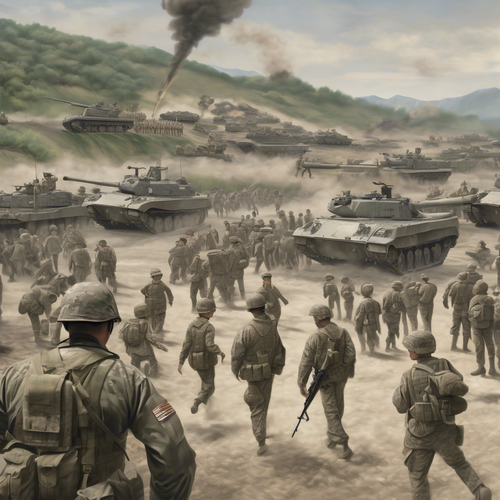
Retreat from the DMZ? Pentagon Eyes Troop Reductions in Korea
In an unexpected turn of events that could potentially reshape the delicate balance of power in East Asia, reports have surfaced from the Wall Street Journal regarding the Pentagon’s considerations to withdraw approximately 4,500 U.S. troops stationed in South Korea. As one of the longest-standing U.S. military presences abroad, this proposed reduction raises pivotal questions about the U.S. commitment to regional security and the future of its relationship with North Korea. 🚧
Spanning over seven decades, the U.S. military footprint in Korea has been pivotal in deterring aggression from the North, following the Korean War that ended in a stalemate in 1953. The enduring presence of nearly 28,500 troops has been considered a cornerstone of the U.S.-South Korea alliance – a promise to deter threats from the unpredictable regime in Pyongyang. Yet, as geopolitical dynamics evolve and criticisms of military spending grow, the potential for troop reductions highlights a significant shift in U.S. military strategy. 📉
Understanding the Driving Forces
Several factors might be influencing this contemplative withdrawal:
- Changing Defense Strategies: The Pentagon appears to be pivoting its focus towards addressing threats from China and Russia, suggesting a broader reallocation of military resources and personnel. Recent strategic documents reflect a notable shift towards the Indo-Pacific region, indicating that traditional military postures must evolve. 🌏
- Financial Pressures: With the U.S. facing ballooning national debt and budgetary concerns, the cost of deploying troops abroad is increasingly scrutinized. Reductions could be part of a larger strategy to prioritize defense spending in areas deemed more critical to U.S. interests.
- Domestic Political Climate: The Biden administration faces a complex political landscape domestically. Public sentiment towards military engagements abroad and the efficacy of U.S. foreign policy is under intense examination, prompting calls for evaluations of troop placements.
The Implications of Troop Withdrawal
The ramifications of such a decision extend well beyond the mere numbers of troops. A withdrawal from South Korea would not only impact military readiness but could also shape diplomatic relations as well as the security calculus of the region. Here are some potential outcomes:
- North Korea’s Response: The withdrawal could be interpreted by North Korea as a sign of U.S. disengagement, potentially emboldening Kim Jong-un’s regime to ramp up its nuclear ambitions or engage in more provocative behavior. Such a strategy could undermine efforts towards denuclearization talks and destabilize the region. ⚠️
- South Korea’s Defense Strategy: A diminished U.S. military presence could compel South Korea to reevaluate its own defense posture. The South may feel pressured to invest more heavily in its military capabilities, potentially resulting in an arms buildup that could escalate tensions further in the Korean Peninsula.
- Shifts in Regional Alliances: A withdrawal may lead to shifts in regional alliances and partnerships as countries respond to perceived power vacuums. Nations like Japan and Australia may need to adjust their security strategies accordingly, potentially leading to an increase in military collaboration among allies in the face of rising threats. 🌍
Military Experts Weigh In
“While troop levels have fluctuated over the years, maintaining a presence in South Korea has been crucial for not only deterring North Korean aggression but also stabilizing the region. Reducing troop numbers could have give and take implications that need thorough scrutiny,” notes Dr. William Peterson, a leading expert in Asian geopolitical affairs. 🚨
Future Considerations
As discussions regarding troop reductions gain traction, potential replacements could involve enhanced intelligence-sharing, cyber capabilities, and advanced missile defense systems. Some proponents argue that shifting the military approach could allow for greater flexibility and adaptability in facing evolving threats. However, such shifts will inevitably require careful planning and robust discussions with both South Korean allies and broader regional partners.
The Pentagon’s deliberation about withdrawing troops from Korea is more than a military decision; it’s a potential redefinition of American presence in global geopolitics. The balance of power in East Asia hangs in the balance, and stakeholders must actively engage in dialogue to navigate these complex waters. The world watches, as history’s next chapter in the Korean saga is yet to be written. 📚
I think reducing troops in Korea could destabilize the region. We need to consider all angles before making such a significant decision.
Is reducing troops in Korea really a good idea? What do you think about the potential implications on global security? Lets discuss!
Im not convinced that reducing troops in Korea is a good idea. What about North Koreas unpredictability? Could this shift backfire?
Im not sure about reducing troops in Korea. What about potential security risks or impact on regional stability? Its a complex issue.
Im not convinced reducing troops in Korea is a good idea. What about the potential risks and impact on regional stability?