
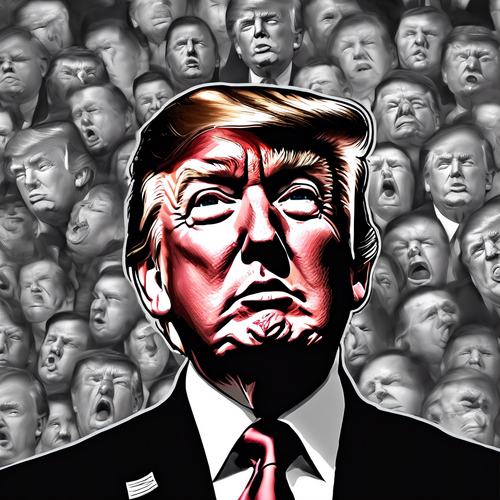
Trump’s Tax Rate Gamble: A New Direction for Economic Policy?
In a move that could reshape the political and economic landscape, former President Donald Trump is reportedly considering support for an increase in the top individual tax rate. 💼 This surprising pivot not only weighs on his legacy of tax cuts but also poses critical questions about fiscal responsibility and income inequality in today’s America.
Historically, Trump has championed the Tax Cuts and Jobs Act of 2017, which lowered the corporate tax rate and aimed to stimulate economic growth. However, an evolving economic context might be nudging him toward a different fiscal philosophy. As inflation continues to strain American families and the government grapples with budget deficits, Trump’s potential endorsement of a tax increase could signal a complex negotiation within the Republican party, testing both party lines and voter sentiment.
The Economic Landscape: Understanding Current Pressures
Inflation is currently at a four-decade high, eliciting distress among the American populace and placing pressure on government policies. With consumer prices soaring, workers are finding their wages lagging far behind the increasing cost of living. According to the Bureau of Labor Statistics, the Consumer Price Index (CPI) has seen a year-over-year increase of 8.5% as of August 2023, a concern that resonates with voters across the spectrum. 📈
In this tumultuous environment, the prospect of increasing federal revenue through a higher top individual tax rate is becoming more attractive to some policymakers. The question is whether Trump’s base, which heavily favored past tax cuts, would support such a shift. The former president’s rebranding efforts, suggesting a more moderate stance on taxes, may reflect a strategy to redefine his image as a statesman capable of addressing pressing economic concerns.
A Shift in Rhetoric: The GOP’s Reaction
The Republican Party has historically positioned itself as the champion of lower taxes. Trump’s possible support for a tax increase could ignite a wildfire of reactions within GOP ranks. Many conservatives argue that raising taxes on high earners risks stifling economic growth and discouraging investment. But, in an age where income inequality is starkly spotlighted, some are calling for a reconsideration.
“I think it’s essential to have a nuanced discussion about tax rates as we navigate these complex times,” notes economic strategist Linda Bergman. “The reality is that revenue generation is critical to funding essential services, and sometimes temporary adjustments are necessary.” 🚀
By the Numbers: Evaluating the Fiscal Impact
If Trump were to endorse an increase to the top individual tax rate—currently set at 37% for those earning over $578,125—what would the implications be? According to the Congressional Budget Office, an increase could yield billions in revenue, potentially offsetting deficits and redirecting funds toward critical social programs. 💵
For instance, a 2% hike could generate an additional $80 billion annually, which could be reinvested into infrastructure, education, or healthcare, addressing the growing inequalities exacerbated by the pandemic. As Congress faces decisions regarding government funding and social support, alternatives to simply cutting expenditures or inflating the debt bubble are sorely needed.
Public Sentiment: Can Trump Pivot Without Alienating Voters?
Public reaction to potential tax increases remains divided. Recent polls suggest that 60% of Americans favor tax reforms that address disparity, particularly among the wealthy and large corporations, despite skepticism about government spending efficiency. However, the notion of increased taxes continues to raise alarms among core Trump supporters. 🎭
Trump’s challenge will be finding a middle ground—balancing the fiscal reality with his traditional base’s ideals. How he frames this potential tax increase, portraying it as a mechanism for sustainable growth rather than a punitive measure, could determine success or failure in this political maneuver.
Looking Ahead: A Fork in the Road
As Trump weighs this potential shift, the implications stretch far beyond his own political ambitions. Should he embrace this new stance, it could catalyze a broader realignment within the Republican Party, possibly influencing future elections as voters reassess their values and priorities. The bottom line is that modern politics demands flexibility and innovation, and Trump’s willingness to adapt could both challenge existing narratives and resonate with an electorate eager for solutions. 🔄
The question remains: will Trump’s potential support for a top individual tax rate increase create a pathway toward greater fiscal responsibility, or will it lead to further polarization among his base? As the discussions unfold, one thing is clear—this is a story worth following, for its impact could echo far beyond the walls of Washington.
Is Trumps tax rate pivot a calculated risk or a desperate move? Lets discuss the economic implications over brunch!
Is Trumps tax rate pivot really a game-changer or just a risky gamble? Lets discuss the GOPs reaction and the fiscal impact!