
Trump’s Fury: Unpacking the ‘Rotten Newspaper’ Remark About The Wall Street Journal
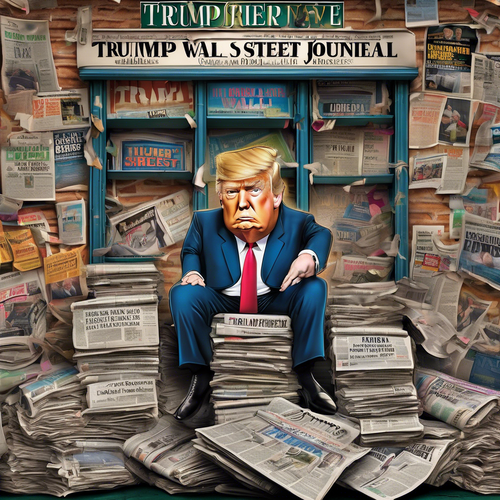
In an unprecedented move, former President Donald Trump unleashed a barrage of criticism against The Wall Street Journal, labeling the esteemed publication a “rotten newspaper.” This incendiary comment not only highlights his fraught relationship with the media but also raises questions about the evolving landscape of journalism and its influence on public perception. 📰
His statement came during a campaign rally, where he lamented that the Journal, long considered a bastion of conservative thought, had betrayed its foundational principles, favoring sensationalism over fact-based reporting. As the conversation around media credibility intensifies, Trump’s reaction serves as a microcosm of a larger battle between journalism and political agendas.
The Context: A Storied Institution Under Fire
The Wall Street Journal has a storied legacy, recognized globally for its comprehensive coverage of finance, economics, and politics. Founded in 1889, it has shaped public discourse and reporting standards for over a century. However, Trump’s ascension to the political arena marked a transformation in the dynamics of media relations, with many outlets facing a new scrutiny regarding their objectivity and integrity.
“I think we can all agree that the media landscape has changed dramatically,” says media analyst Claire Jones. “Trump’s comments reflect a wider disillusionment with journalism among his supporters, who feel that traditional outlets no longer represent their views.”
A Shifting Landscape: Polarization and Media Trust
A recent Gallup poll indicates that trust in the media has plummeted to historic lows, with only 16% of Americans expressing confidence in newspapers. This drastic decline reflects a broader polarization in public sentiment, particularly around issues relating to politics and policy. Trump’s disdain for established media outlets underscores this dissatisfaction and shifts the narrative towards alternative sources of information that are perceived as more favorable to his base.
What Trump’s Criticism Means for Journalism
Trump’s reaction to The Wall Street Journal is emblematic of a larger trend where politicians and public figures increasingly denounce media narratives that conflict with their agendas. This strategy often serves to galvanize support while undermining traditional journalism’s credibility:
- Amplifying Alternative Media: As Trump’s followers gravitate toward less traditional platforms, the line blurs between fact and opinion, fostering an environment where misinformation thrives. 🚩
- Questioning Objectivity: The former President’s allegations have prompted discussions about media bias, sparking debates over editorial integrity and the implications for democratic discourse.
- Potential Censorship: The backlash against perceived media slights raises concerns over the integrity of journalistic practices, with fears that future administrations might pursue more aggressive censorship tactics. 📉
The Broader Implications: Navigating the Media-Matically
The collision between Trump’s critique and The Wall Street Journal’s reputation reveals a media landscape in crisis. This discord not only complicates the relationship between politicians and journalists but also shapes how citizens access and interpret information.
As the 2024 presidential election approaches, the ramifications of Trump’s characterization of The Wall Street Journal and his broader media strategies will likely unfold, compelling news organizations to reevaluate their approaches to coverage and audience engagement.
A Call for Reflection: Journalism’s Role in Democracy
In a time of profound societal fractures, investigating the veracity of claims made by public figures is paramount. Journalists face the dual challenge of maintaining ethical integrity while navigating an adversarial environment rife with misinformation.
“The trust rebuild begins with journalists holding themselves to the highest standards of accuracy and accountability,” emphasizes veteran journalist Michael Reinhardt. “We must unite to reclaim the narrative.”
Conclusion: Navigating the Future
Trump’s derision of The Wall Street Journal as a ‘rotten newspaper’ is more than just a verbal attack; it encapsulates a moment of reckoning for media institutions across America. 📊 As society grapples with issues of trust and bias, the responsibility falls on journalists to uphold a standard that respects the truth amid the cacophony of political rhetoric.
In the search for credible information amidst chaos, the public must grapple with questions of media literacy and seek to differentiate reliable reporting from politically driven narratives. The journey ahead calls for vigilance—not just from journalists but from all of us—as we strive to ensure that truth remains the cornerstone of our democracy.
I cant believe Trump called The Wall Street Journal a rotten newspaper. Do you think its justified criticism or just a tantrum?
I think Trumps beef with The Wall Street Journal is just a distraction from real issues. Media drama, as usual.
I find it intriguing how media trust is at the center of Trumps criticism towards The Wall Street Journal. What are your thoughts?