

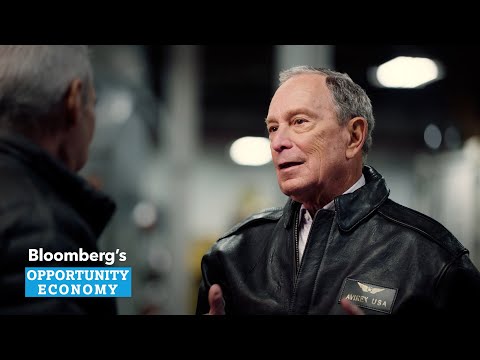
Are you curious about Mike Bloomberg’s economic policies? Well, you’re in luck! As an authority on the subject, I’m here to provide you with a detailed list of his economic policies that have shaped his approach to economic issues over the years. So, let’s dive right in and explore what Mike Bloomberg’s economic policies entail.
***1. Fiscal Responsibility***
One of the key pillars of Mike Bloomberg’s economic policies is fiscal responsibility. Bloomberg believes in balancing budgets and avoiding excessive debt accumulation. During his time as Mayor of New York City, he took steps to reduce the city’s deficit and improve its credit rating. This commitment to fiscal responsibility has guided his approach to economic policy at both the local and national levels.
***2. Support for Small Businesses***
Another important aspect of Mike Bloomberg’s economic policies is his support for small businesses. Bloomberg understands the vital role that small businesses play in driving economic growth and job creation. He has advocated for policies that make it easier for small businesses to thrive, such as reducing regulatory burdens and providing access to capital.
***3. Investment in Infrastructure***
Infrastructure investment is another key component of Mike Bloomberg’s economic agenda. Bloomberg recognizes the importance of investing in infrastructure to support economic growth and competitiveness. He has called for increased funding for infrastructure projects, such as improving roads, bridges, and public transportation systems.
***4. Education and Workforce Development***
Mike Bloomberg also prioritizes education and workforce development in his economic policies. He believes that a well-educated and skilled workforce is essential for a strong economy. Bloomberg has supported initiatives to improve education outcomes, expand access to vocational training programs, and ensure that workers have the skills they need to succeed in the modern economy.
***5. Innovation and Technology***
Finally, Mike Bloomberg is a strong advocate for innovation and technology as drivers of economic growth. Bloomberg has promoted policies to support the development of new technologies, such as clean energy and advanced manufacturing. He has also championed initiatives to foster entrepreneurship and encourage the growth of high-tech industries.
In conclusion, Mike Bloomberg’s economic policies are characterized by a commitment to fiscal responsibility, support for small businesses, investment in infrastructure, education and workforce development, and promotion of innovation and technology. These policies reflect Bloomberg’s belief in creating a strong and inclusive economy that benefits all Americans. So, whether you agree or disagree with his approach, one thing is clear – Mike Bloomberg’s economic policies have left a significant impact on economic policy discussions in the United States.
Exploring the Political Beliefs of Michael Bloomberg: A Look into the Mind of the Billionaire Politician
Are you curious about **Mike Bloomberg’s** economic policies? Well, let’s dive into the mind of the billionaire politician and explore his beliefs in this area. One of the key aspects of **Bloomberg’s** economic policies is his support for raising the minimum wage. He believes in ensuring that all workers are paid a living wage that allows them to support themselves and their families. This stance aligns with his focus on economic equality and social justice.
Another important element of **Bloomberg’s** economic policies is his emphasis on investing in infrastructure. He views infrastructure projects as a way to create jobs, stimulate economic growth, and improve the overall quality of life for Americans. By modernizing roads, bridges, and public transportation systems, **Bloomberg** aims to boost productivity and enhance the country’s competitiveness on a global scale.
Moreover, **Bloomberg** is known for his advocacy of free trade agreements. He believes that free trade can lead to increased economic growth, job creation, and innovation. By opening up markets and promoting international trade, **Bloomberg** seeks to expand opportunities for American businesses and workers. His support for free trade reflects his belief in the benefits of globalization and interconnectedness in the modern economy.
In addition, **Bloomberg** has shown a commitment to tackling climate change through his economic policies. He supports investing in clean energy technologies and reducing carbon emissions to combat the environmental challenges facing the planet. By promoting sustainability and renewable energy sources, **Bloomberg** aims to create a more environmentally friendly and resilient economy for future generations.
Overall, **Mike Bloomberg’s** economic policies reflect his values of fairness, progress, and sustainability. Through his advocacy for raising the minimum wage, investing in infrastructure, supporting free trade agreements, and addressing climate change, **Bloomberg** demonstrates a comprehensive approach to economic policy that prioritizes the well-being of individuals, the economy, and the environment.
The Legacy of Bloomberg: Exploring the Business Magnate’s Impact on Finance and Media
Are you curious about **Mike Bloomberg’s economic policies** and their impact on finance and media? Let’s delve into “The Legacy of Bloomberg: Exploring the Business Magnate’s Impact on Finance and Media” to uncover the key aspects of his influence.
When examining **Mike Bloomberg’s economic policies**, it is essential to highlight his approach to fiscal responsibility and financial transparency. As the former mayor of New York City, Bloomberg implemented various financial strategies aimed at promoting growth and stability in the city’s economy. His emphasis on balanced budgets and efficient use of resources helped steer the city through challenging economic times, earning him a reputation as a pragmatic leader with a keen understanding of financial matters.
In addition to his focus on economic governance, **Mike Bloomberg** also made significant contributions to the media industry through the creation of Bloomberg LP, a global financial information and media company. By establishing Bloomberg LP, he revolutionized the way financial news and data are disseminated, providing investors and professionals with real-time information to make informed decisions. This innovative approach not only transformed the media landscape but also solidified Bloomberg’s status as a pioneer in the intersection of finance and media.
Furthermore, Bloomberg’s impact extends beyond his business ventures, as he has been actively involved in philanthropy and advocacy efforts to address various social and environmental issues. His commitment to using his wealth and influence for the greater good has left a lasting legacy that transcends the realms of finance and media. In conclusion, **Mike Bloomberg’s economic policies** have had a profound impact on both the business world and society at large, shaping the way we think about finance, media, and leadership.
Unpacking Bloomberg’s Political Beliefs: Where Does He Stand on Key Issues?
Are you curious about **Mike Bloomberg’s economic policies** and where he stands on key issues? Let’s unpack his political beliefs to gain a better understanding. When it comes to economic policies, Bloomberg has been known to support **pro-business initiatives** that aim to stimulate economic growth. He has advocated for **tax cuts** for corporations and high-income individuals, believing that it can spur investment and job creation. Additionally, Bloomberg has shown a preference for **deregulation** in certain industries, arguing that it can enhance competitiveness and innovation.
On the other hand, Bloomberg has also emphasized the importance of **income inequality** and has proposed measures to address this issue. He has called for **increasing taxes on the wealthy** to fund programs that benefit the middle and lower classes. Bloomberg has also expressed support for **raising the minimum wage** to ensure that workers can earn a living wage. Furthermore, he has highlighted the significance of **job training programs** to equip individuals with the skills needed to succeed in the modern economy.
In summary, Mike Bloomberg’s economic policies reflect a blend of **pro-business** and **pro-worker** initiatives. While he supports measures such as tax cuts and deregulation to spur economic growth, he also advocates for policies that address income inequality and support the middle and lower classes. By understanding where Bloomberg stands on key economic issues, we can gain insight into his overall political beliefs and priorities.
In conclusion, Mike Bloomberg’s economic policies focus on promoting innovation, supporting small businesses, and addressing income inequality through a combination of tax reforms and investment in education and infrastructure. **What impact do Mike Bloomberg’s economic policies have on the middle class?** Bloomberg’s policies aim to create more opportunities for the middle class to thrive and succeed in a rapidly changing economy. **How does Mike Bloomberg plan to address the national debt?** Bloomberg plans to implement fiscal policies that promote economic growth while also addressing the national debt through responsible spending and revenue generation. **Will Mike Bloomberg’s economic policies be able to withstand economic challenges in the future?** Bloomberg’s policies are designed to be flexible and adaptive to changing economic conditions, which may help them withstand challenges in the future.
In summary, Mike Bloomberg’s economic policies are aimed at fostering economic growth, reducing income inequality, and creating a more inclusive economy for all Americans. By focusing on innovation, small businesses, and addressing the national debt, Bloomberg hopes to create a more prosperous future for the country.
Bloombergs economic policies are just a facade for his own personal gain.
Is Bloomberg secretly a unicorn enthusiast? His economic policies may reveal the truth!
Do Bloombergs economic policies really benefit the middle class or just the wealthy?
I find it intriguing how Bloombergs business background shapes his political beliefs. Is his approach beneficial or detrimental to the economy?
Do you think Bloombergs economic policies are truly beneficial for the majority, or are they just another way to benefit the wealthy few?
I dont buy into Bloombergs economic policies. They seem too focused on the wealthy, ignoring the needs of the average person.
I find Bloombergs economic policies intriguing, but does his billionaire status cloud his judgment on key issues? Lets dive deeper.
I find Bloombergs economic policies intriguing, but do they truly benefit the average American? Lets dig deeper!
I find it fascinating how Bloombergs economic policies reveal his stance on key issues. Cant wait to see how they play out!
I find it fascinating how Bloombergs background in finance shapes his political beliefs. Do you think his wealth influences his policies too much?
I wonder if Bloombergs economic policies truly benefit all Americans or just the wealthy elite. What do you think?